

Diagnose.Control.Keep moving. — Dr. Rozhin Farzaneh
Internal Medicine Specialist, Rheumatology Subspecialist Tabriz
For joint pain and stiffness, lupus and other rheumatic diseases, with clear explanations and regular follow-up.
Listen and understand first, then treat; plain explanations and follow-up all the way.
Dr. Rozhin Farzaneh is an internal medicine specialist with a rheumatology subspecialty in Tabriz. Rheumatology deals with inflammatory diseases of the joints, muscles and connective tissue, such as rheumatoid arthritis, lupus, spondylitis and gout. These conditions are usually long-term and can take time to diagnose. This site helps you know when to see a rheumatologist, what your test results mean and why regular follow-up of your medicines matters. The aim of treatment is to control inflammation and keep you moving.
More about the doctorJoint and connective tissue conditions, in plain language.
Every rheumatic condition has its own course. These pages explain what the condition is, how it is investigated and how treatment generally works. Your diagnosis and treatment plan are decided by the doctor after an examination.
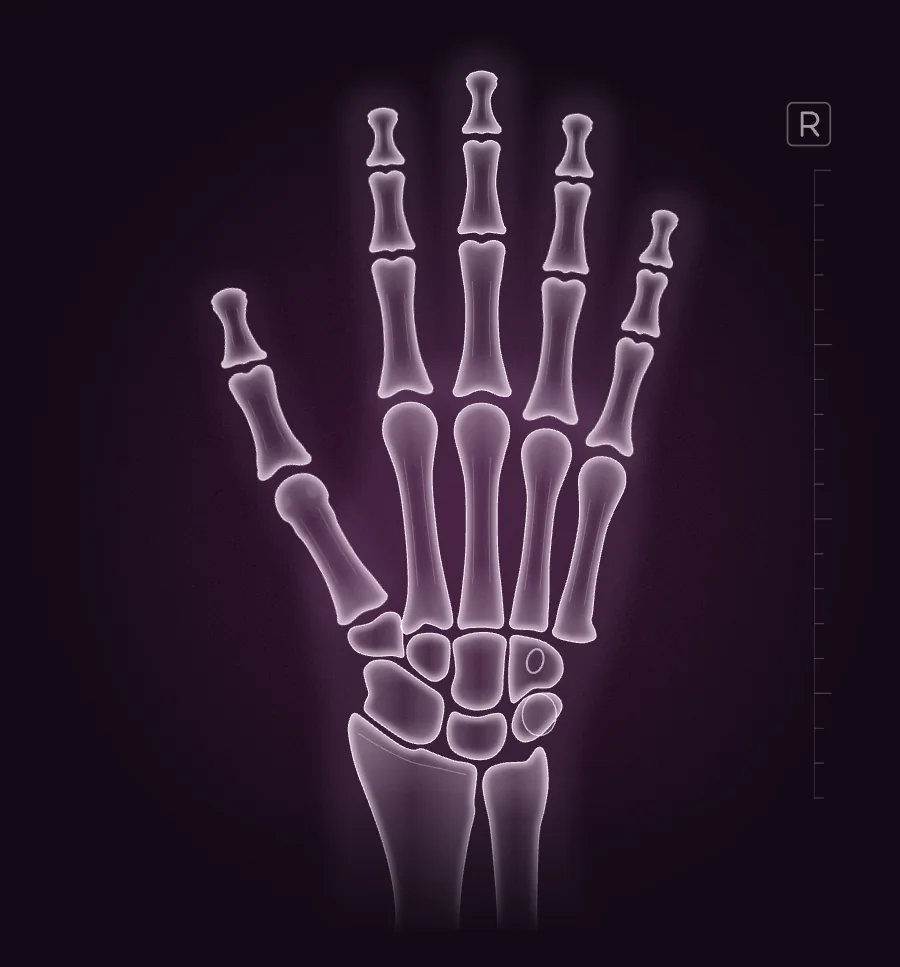
Rheumatoid arthritis
Rheumatoid arthritis is a long-term autoimmune condition that inflames the joints. This page explains what the symptoms are, when to see a rheumatologist, how it is assessed, what treatment looks like in general and when to get help urgently.
Read moreLupus, Sjögren's and scleroderma
Lupus, Sjögren's syndrome and scleroderma are autoimmune connective tissue diseases and can affect the skin, joints and internal organs. This page explains the symptoms, how they are assessed, the general shape of treatment and the warning signs in plain language.
Read moreInflammatory back pain and spondylitis (spondyloarthritis)
Inflammatory back pain, ankylosing spondylitis and psoriatic arthritis are a group of inflammatory conditions of the spine and joints. This page explains how inflammatory back pain differs from ordinary back pain, how it is assessed and what treatment involves in general.
Read moreGout and osteoarthritis
Gout is known for a sudden attack of pain and swelling in one joint, and osteoarthritis for gradual wearing of cartilage. This page explains the difference between them in plain language, along with how they are assessed, the general approach to treatment and the warning signs.
Read moreBehçet's disease and vasculitis
Behçet's disease and vasculitis involve inflammation of the blood vessels and may affect the mouth, eyes, skin, joints and internal organs. This page covers the symptoms, how it is assessed, the general shape of treatment and the warning signs.
Read more
From the first examination to long-term follow-up
Rheumatic diseases are not treated in one go: treatment is adjusted over time. At each step you know what comes next.
- Step 1 of 5.
Listening and joint examination
The doctor asks about your pain and morning stiffness and examines your joints. Bring earlier test results and a list of your medicines.
- Step 2 of 5.
Tests and imaging
Depending on your symptoms you may need blood tests and imaging. No single result is a diagnosis: it is read together with the examination.
- Step 3 of 5.
Diagnosis and treatment plan
The diagnosis and the treatment options are explained in plain words, and you make the plan together. The aim is to control inflammation and keep you moving.
- Step 4 of 5.
Adjusting and monitoring medicines
Treatment is adjusted over time, and regular blood tests keep your medicines under watch. Do not stop or reduce a medicine on your own.
- Step 5 of 5.
Long-term follow-up
Most rheumatic diseases are long-term, so regular visits continue. Get in touch sooner if a new symptom appears or if you plan a pregnancy.
You are not alone on this path.
Treating a long-term condition is more than visits. Regular blood tests to monitor medicines, imaging, specialty medicines and follow-up are all part of it. The support team coordinates these so that you and your family spend less time chasing them.
Lab tests and blood sampling at home
Monitoring medicines and following the disease depends on regular tests. The support team arranges the appointment, the sampling and the follow-up of results.
Imaging and ultrasound
Quick appointments and results, second reads of images, and reports sent directly to the treating doctor.
Pharmacy and specialty medicines
Help getting specialty medicines, with quick delivery for Tabriz residents.
Fast referral to specialists and sub-specialists
If you need another doctor, the support team books the appointment and refers you.
Rehabilitation and wellbeing
The support team books appointments and refers you to rehabilitation and health specialists.
Treatment and rehabilitation at home
When getting out is hard, part of treatment and rehabilitation comes to you.
Services marked "Free" on the support form are provided at no cost.
What is worrying you?
Tap what you are facing to reach the matching page. This list is not a diagnosis; it only points you to the right page.
- Morning joint stiffness
- Swollen finger joints
- Back pain at night
- A positive ANA or RF result
- Sudden big-toe pain
- Recurrent mouth ulcers
- Dry eyes and mouth
- Facial rash in the sun
- Fingers turning blue in the cold
A red, hot joint with fever, sudden leg weakness or a loss of vision cannot wait for an appointment. In an emergency, call 115 (Iran's emergency number). When should I call urgently?
Simple answers to the first questions.
I have joint pain; should I see a rheumatologist or an orthopedist?
A rheumatologist is the right choice if joints are swollen and warm, you are stiff for more than half an hour in the morning, several joints are involved at once, or the pain comes with fever, a skin rash, dry eyes and mouth or marked tiredness. Pain after an injury, or a structural problem in one joint, is more a matter for an orthopedist. If you are unsure, mention it to support when you book.
Does a positive ANA or RF mean I have a disease?
Not necessarily. These tests are not a diagnosis on their own, and some healthy people test positive. What a result means can only be judged together with symptoms, an examination and the other tests.
What should I bring to the first visit?
Test results, reports or files of X-rays, ultrasound and MRI, a list of all the medicines you take, any history of joint or autoimmune disease in your family, and your insurance booklet. If something is missing, come anyway; support can help you get it.
Will I have to take medicine for the rest of my life?
Many rheumatic conditions are long-term and treatment lasts a long time, but the medicines are reviewed over time and may change. The aim is to control inflammation with the fewest side effects. Never stop any medicine, especially a corticosteroid, without your doctor's advice.
Can I become pregnant with this condition?
Many patients do become pregnant with planning ahead, but some medicines need to be changed before pregnancy. Talk to your doctor before trying to conceive, and do not stop a medicine on your own.
Do you work with insurance?
The list of insurers will be announced soon.
Do you offer online follow-up?
Details will be announced once the doctor confirms them.
These answers are general and do not replace your doctor's advice for your situation.
The first step, a calm conversation.
Go to the booking page or talk to support. Either way, we are with you.
Support number